
Behind the Screen #9
Love Potion

From the Editor
In eleven day’s time, the next season of RPG HQ meetups begins! Don’t forget to RSVP at the bottom of this issue— thus far I have all of ONE person confirmed. These meet-ups are open to all students— even if they haven’t gone through any of the Summer Sessions so invite your friends, siblings, cousins, neighbors— whomever you’re interested in playing with. Saturday, September 13th— I’ll be glad to see you!
An Interview with the Creator of Cairn Session 2
Last week it was my pleasure to share the first of several sessions of an exclusive conversation I had with Yochai Gal, the author and creator of the celebrated TTRPG, Cairn. In this session we drill down deeper into OSR/NSR philosophy, collaboration, and the community central to game. If you missed the first nine questions, hey can be found here. Enjoy!
Part 1: On The Philosophy of Cairn
10.) TM What's a common misconception people have about Cairn or the old-school renaissance (OSR) style of play that you'd like to clarify?
YG: The #1 most common refrain I hear is that Cairn is only good for “short” campaigns and one-shots. This is demonstrably false, as evidenced by the numerous blogs covering Cairn sessions that span multiple years (and counting).
I'm also pretty tired of hearing about how much longer Cairn 2e is than 1e. It's not longer, there are just backgrounds to choose from now! The rules are actually shorter over all.
11.)TM: Cairn is often praised for its simplicity and elegance. How did you balance the need for streamlined rules with the desire for depth and player agency?
YG: I’m not the first designer to think of the rules as a flexible framework to the actual gameplay experience. They set the margins, the purpose, and the expectations of play, but not the result. When I started designing Cairn I set out with a clear purpose: to retain (or if possible, enhance) what I liked about the OSR playstyle while ignoring the crunch I’d always struggled with. Of course, “rules lite” is a misnomer. What constitutes “rules lite” and “crunchy” is entirely up to the player. To me that meant minimal math (roll under), fewer compounding rolls (to-hit, bonuses, etc.), and so on.
Some of the core tenets of old school play are player skill over character skill, i.e. “the answer is not on your character sheet,” and so on. I felt that both level-less and classless games best demonstrated this philosophy, which led me to games like Knave, Maze Rats, Into The Odd, Tunnel Goons, and so on.
Part 2: The Collaborative and Creative Process
12.)TM: How do you approach world-building for Cairn, which is often about exploring unfamiliar and dangerous places?
YG: There are a few chapters that cover this in the Warden’s Guide, and I recently covered this a bit more on my blog. But in a nutshell: my inspiration comes from the real world. History, fiction, personal experiences etc. I try to think about things that scare me or make me uncomfortable, and I write around that discomfort.
13.)TM: What was the biggest hurdle you had to maneuver around to get Cairn 2e made?
YG: The writing! It takes a long time. You have to dedicate yourself to the task. I took a week off my day job to “finish” writing the game a few weeks before the Kickstarter launched, working from 7am to 3pm every day. It was wonderful, and I’m very lucky to have been able to do that. But I also spent nearly two years writing what would later be the Player and Warden’s Guides. Take the time you need to make something you’re proud of. I didn’t get to do everything I wanted due to some constraints, but eventually you have to be able to look at your work and mark it as “finished.” It never really is, though.
14.)TM: Your work is a significant presence on itch.io. How has that platform influenced your development and distribution process?
YG: I distribute my work via Google Drive, DTRPG, Itch, Lulu, Amazon, and so on. I spend a lot of time curating collections on Itch.io; and I appreciate the website’s tech-forward approach to managing releases (see Butler for more). I also like their business model, despite everything I do being free to download. Itch is a nice place to interact with folks interested in Cairn as well.
Part 3: The Community and The Future
15.)TM: As a creator, what has been the most rewarding aspect of your journey with Cairn?
YG: Probably the community. Not just the one we built around Cairn, but also the NSR as a whole. A lot of folks find the NSR Community (which is a Discourse forum and Discord server) via Cairn, and I think that’s just wonderful.
16.)TM: How do you feel the TTRPG landscape has changed in the last 10 years, and what role do you see games like Cairn playing in that progression?
YG: I’m chuffed to see that the OSR community seems to have firmly adopted its weirder offspring (Cairn, Mothership, Knave, etc.). That’s helpful; it almost makes the NSR tag I’d used previously less necessary. It’s more inclusive and welcoming as well. All positives in my mind. The fracturing of the OSR post-G+ era was devastating in many ways but I’m happy to see the direction things have gone in recent years.
As for the future, I’m not really sure. You see a lot of innovation in this space, and I don’t expect that to change. If Cairn can play even a small role in providing a base for designers to build on, that would be wonderful.
Part 4: The Fun Stuff & A Creator's Life
17.)TM: When you're not designing games, what do you enjoy doing in your spare time?
YG: Hiking, playing with my kid, watching and reading science fiction, reading about worker cooperatives (that’s my day job), and doing various linux-y things.
From history lessons, to inspirations and beyond today into the future— this interview continues next edition!
Maelstrom: Space Operas in Cairn Update
The Resonance: A Replacement Magic System for Maelstrom
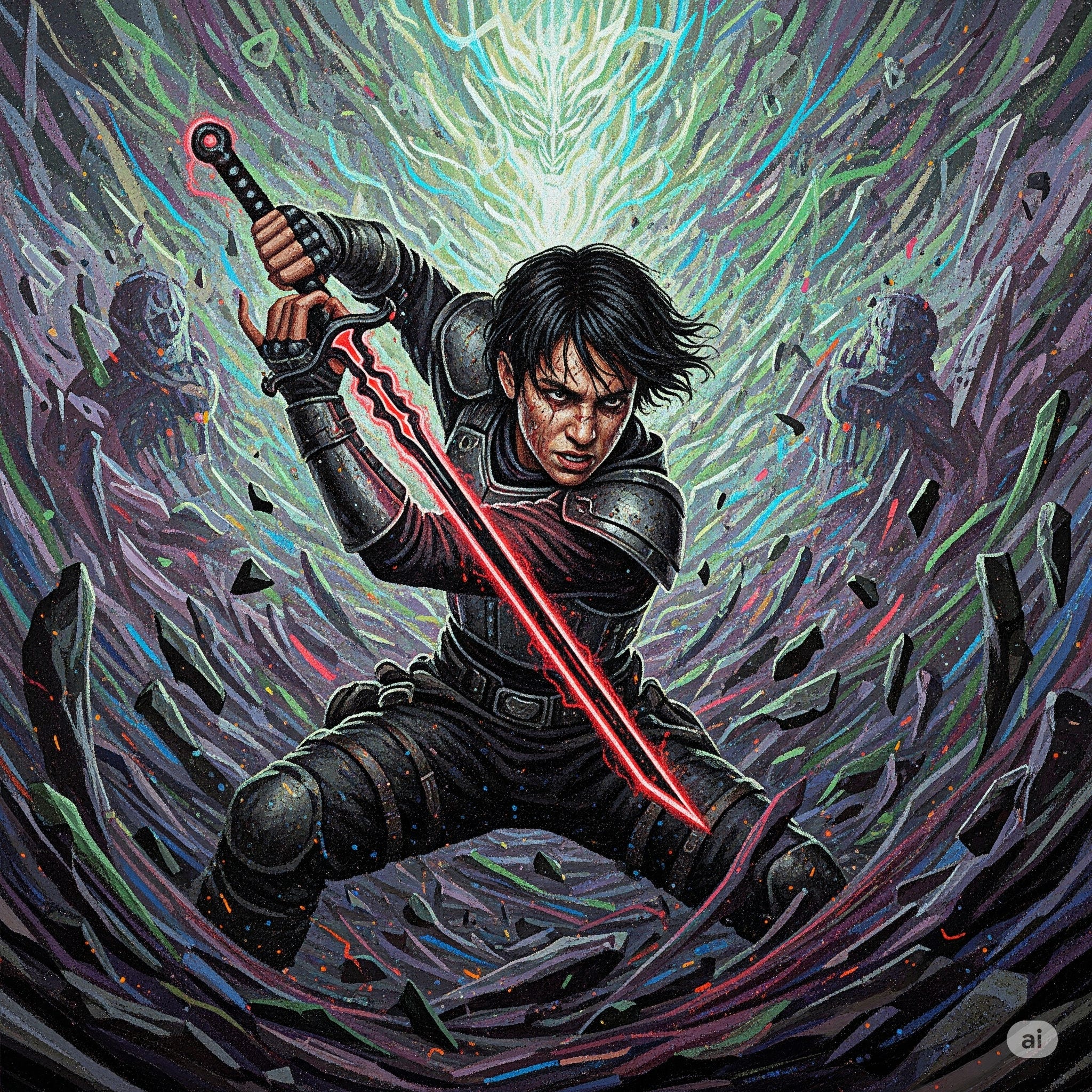
Cairn has a very straightforward, although nuanced system for magic. The simplicity is bound up in any character having the ability to cast magic given appropriate circumstances (usually by holding a book with a single spell in it while attempting to cast). For more Sci-Fi flavored genres, I considered how to handle magic— and instantly knew I had to develop an adaptation of the Force. I’ve previously written a bit about the adaptation process (See Issue #7), but today I’ll take you deeper into the nomenclature and mechanics of my version of sci-fi psionic magic. I hope you enjoy the read!
The Thrum is an omnipresent energy field that binds all things together, from the smallest asteroid to the largest star. It is the lifeblood of the cosmos, and only a select few are sensitive enough to manipulate it. This system, known as The Resonance, replaces the standard magic rules from Cairn and Cairn 2e.
Congruity with Cairn Magic
The Resonance is designed to feel familiar to players of Cairn by maintaining the core principle of risk and resource management.
Finite Resources: Just as a character has a finite number of inventory slots and can only sustain a certain amount of Fatigue, a Thrum User's power is finite. The use of a daily budget for Thrum Powers (for NPCs) or Fatigue for Player Characters maintains the strategic, resource-management feel of the core game.
Risk and Consequence: While The Resonance lacks the chaotic mishap tables of traditional Cairn magic, its power comes with a significant cost. The use of Dissonance (Dark Side) powers can lead to a character's physical and spiritual corruption, adding a layer of permanent consequence and moral choice to their abilities.
Points of Departure
The Resonance is not magic. It is an internal, innate ability, and its fundamental principles differ from those of a standard spellcaster.
Innate Ability: Thrum powers are not contained within physical spell books. Instead, they are an extension of the user's own will and connection to The Resonance. You are born with the ability to use the Thrum, you do not learn it from a book.
Distinct Paths: The Resonance has two distinct paths: The Harmony, which is a path of peace and balance, and The Dissonance, a path of ambition and power. These paths are not just philosophical; they grant access to different types of powers and have different mechanical consequences.
No Spell books: A character's power is not tied to items, so there is no need to track Spell books or inventory slots. Power is simply a function of your will.
PC vs. NPC Thrum Users
There is a key difference in how Thrum powers are tracked between the two types of characters, which is a deliberate design choice to keep the game running smoothly.
Player Characters (PCs): A PC's Thrum ability is tied to their physical and mental endurance, represented by their Fatigue score. Each time a PC uses a Thrum power, they gain Fatigue equal to the power's cost. This is a deliberate, direct link to the core Cairn rules of encumbrance and resource management (see Inventory and Fatigue). Each Fatigue gained occupies one of the PC's 10 inventory slots. When all 10 slots are filled (by items or Fatigue), the PC is reduced to 0 HP and is considered Exhausted.
Non-Player Characters (NPCs): The Warden, however, doesn't need to track Fatigue for an opposing Thrum user. Instead, an NPC's ability to express their power is a simple resource pool based on their raw power. Therefore, the total number of Fatigue Equivalent points an NPC Thrum user can manifest in a day is equal to their WIL score. This is a GM-facing abstraction that allows for a dynamic and challenging encounter without the need for complex bookkeeping, in line with the Cairn philosophy of rulings over rules and running simple monsters (see Running the Game and Monsters).
The Consequences of a Failed Power
A Thrum user's concentration is fragile. When a user attempts to wield a Thrum power and fails a required Save, their connection to The Resonance is disrupted by psychic feedback. The user's declared action for the round fails, and they are so disoriented by the mental backlash that they are unable to act in the next round.
This penalty is simple and applies to both PCs and NPCs, providing a clean and consistent mechanical consequence for reaching beyond one's grasp. The Warden can simply narrate the failure and mentally note that the character will not be a factor in the upcoming round.
The Consequences of Dissonance
The raw power of the Dissonance is not free. A character who chooses this path risks physical and spiritual corruption. Any time a Player Character uses a Dissonance power, they gain 1 point of Corruption. As their Corruption score increases, so do the risks.
1-3 Corruption: The character’s eyes may glow in moments of anger, or they might develop a physical tell, such as a tremor in their hand when not using their power.
4-6 Corruption: The physical and mental effects become more pronounced. The character might have a permanent eye color change to red or yellow, or a permanent shadow that follows them. Their emotional state is constantly on edge.
7+ Corruption: The character’s mind and body begin to break. They may develop physical mutations, hear voices, or suffer from severe psychological instability. At this point, the GM is encouraged to introduce permanent, narrative-changing consequences.
Exceeding Your Limits
When a Thrum user's Fatigue equals or exceeds their WIL score, they are immediately Exhausted and must make a WIL Save. This is a breaking point, where their connection to The Resonance becomes unstable. On a success, the user is simply Exhausted as per the core rules. On a failure, the user is overwhelmed by the feedback from The Resonance. This is where the Harmony vs. Dissonance distinction becomes critical.
Dissonance User (Failure): The negative energy they have been wielding turns on them. They immediately take 1d6 of pure, psychic damage that cannot be reduced by armor or temporary HP. Additionally, the user gains 1 Corruption point.
Harmony User (Failure): The user is overwhelmed by their own purity and is unable to handle the strain. They take 1d6 of psychic damage. Instead of gaining a Corruption point, they are pulled closer to the Dissonance and must make another WIL Save. On a failure, their path shifts, and they gain a point of Corruption.
This material is still being polished, and your input is highly prized! Leave a comment below with your thoughts on all you’ve read thus far!
From the Intergalactic Autocracy’s Hangar
Space Operas are absolutely nothing without interesting vehicles. Today I preview just a handful of concept art for some of the faction vehicles available in Maelstrom: Space Operas in Cairn.
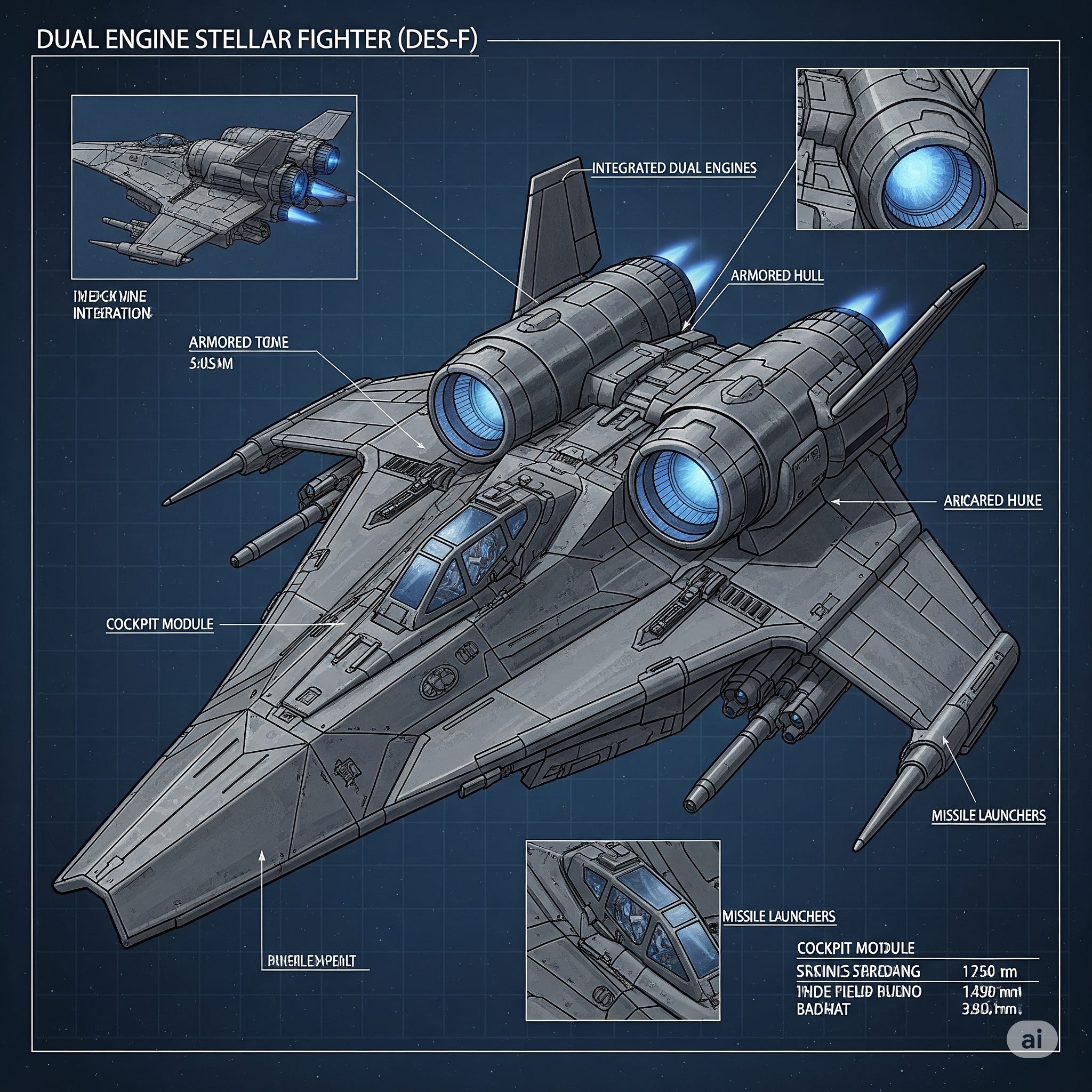
The workhorse of the IGA Stellar Navy, DES Fighters are terrifying armor to encounter. Whether in space, or within atmosphere, these versatile fighter craft are well armored, nimble, and fast. Some might say that the Intergalactic Autocracy is built off their backs!
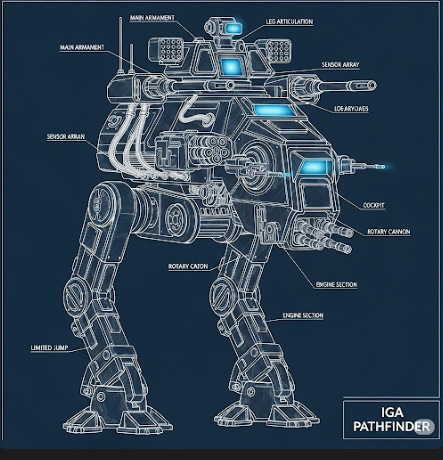
Specifically designed for multiple types of terrain, the IGA Pathfinder is a staple of the IGA Armor Corps. These bi-pedal vehicles are manufactured for versatility. By default their chassis are lightly armored, and as the name implies, perfect for reconnaissance. What makes them truly versatile is their potential load-outs and upgrades. What was once a light scout craft easily becomes a heavily armored siege craft— and back again!
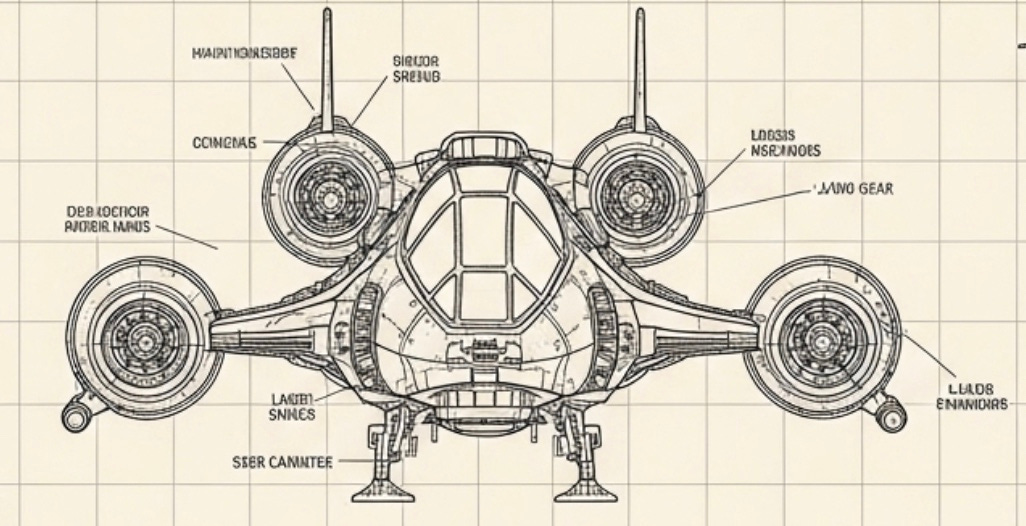
The Harrier-A is the base chassis for the bulk of the Galactic Free-Coalition’s Atmospheric Air Force. It can be re-kitted as a bomber (Harrier-B), or interceptor (Harrier-T). All forms of this model include a cable launcher.
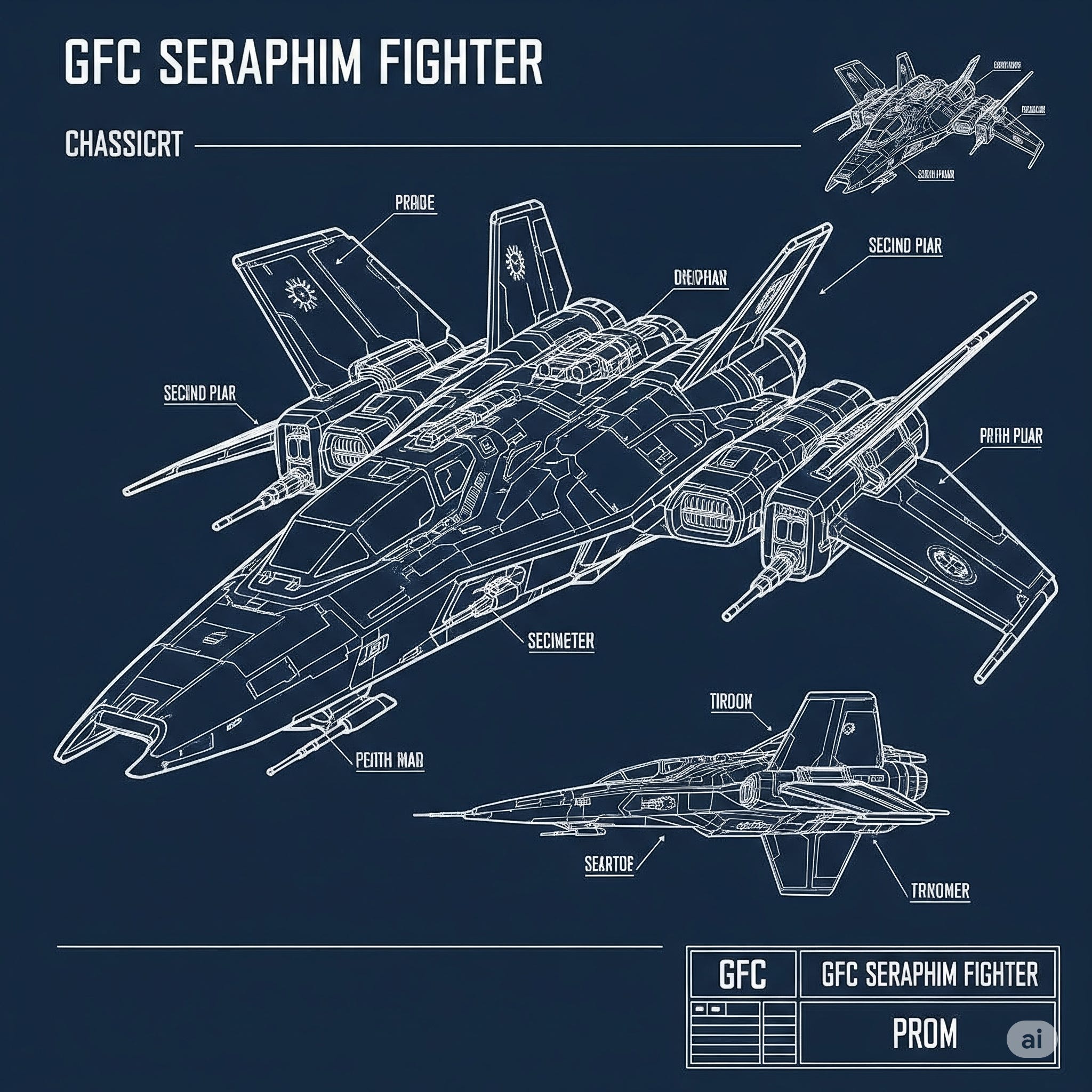
This spacecraft is the choice fighter model of the Galactic Free Coalition. Like the IGA DES series, this vehicle is capable of combat in and out of atmosphere. In terms of over all performance the edge likely goes to the DES-F, but what the Seraphim lacks in handling it more than makes up in firepower.
RPG HQ IS GO!
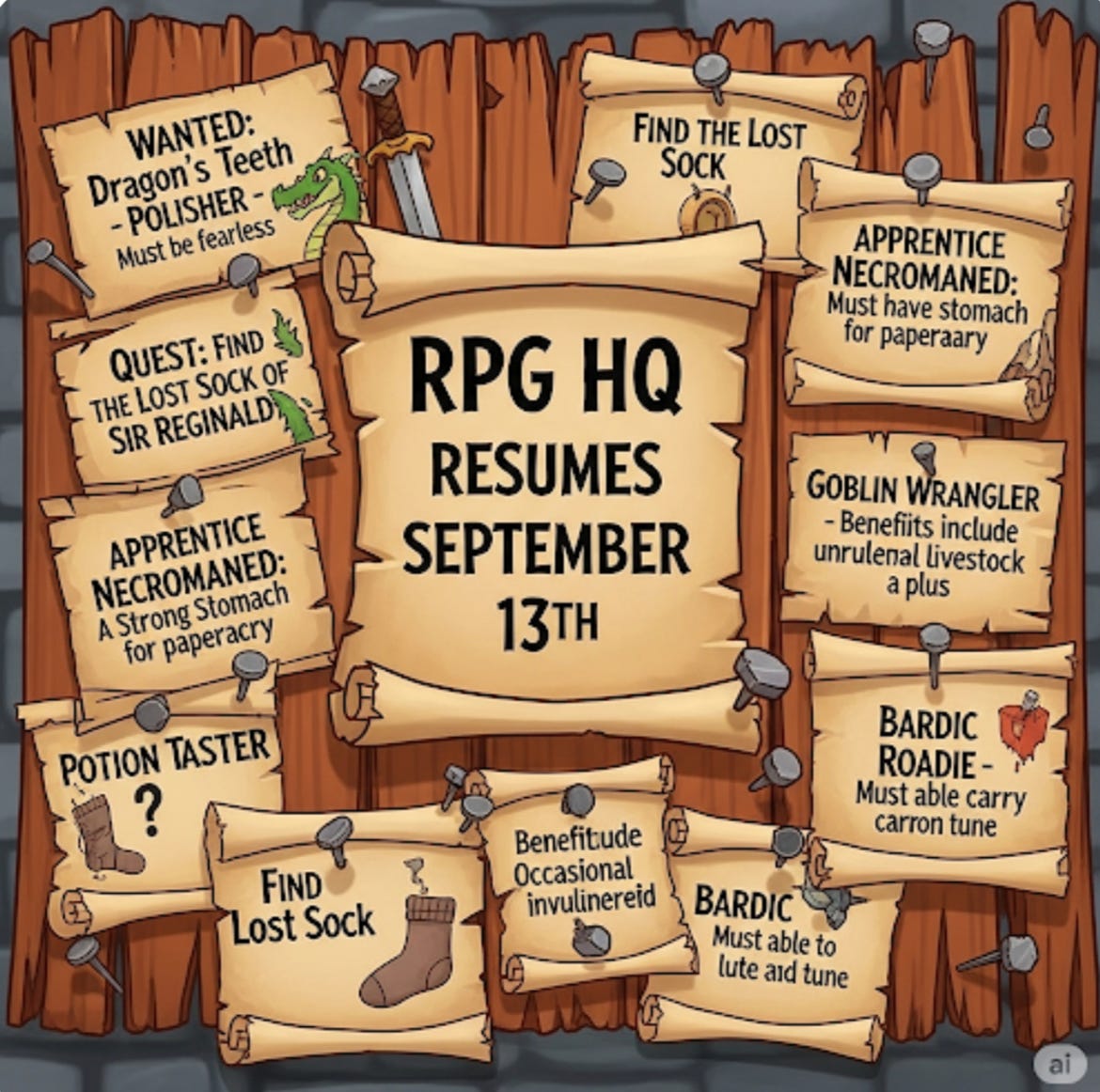
RPG HQ is starting up again on September 13th! Get your calendars ready and join us at the Hennepin County Library - Rockford Road, 6401 N 42nd Ave, Crystal, MN 55427, from 10:00 AM to 2:00 PM. We can't wait to see you back at the table!(RSVP for this event here!)
FUTURE DATES
Saturday, September 27th —— Location TBD
Saturday, October 11th —— Location TBD
Saturday, October 25th —— Location TBD
Saturday, November 8th —— Location TBD
Saturday, November 22nd —— Location TBD
Can you help run a game?
RPG HQ is a community event, and we rely on the generosity of our volunteer game runners to make it happen. If you're interested in running a game of Cairn or any other RPG, please reach out to us! You'll be helping to create a welcoming space for new and veteran players alike!