
Behind the Screen #4:
A Philosophy for Accessible Tabletop Role-Playing Games

You carefully make your way down the steep, spiraling limestone staircase, your lantern held in line with your belt. Your footfalls are slick with the damp of mildew, producing a soft, squelching that causes you to steady yourself against the sticky, quarried stone walls of the staircase. The bottom must be around the next turn.
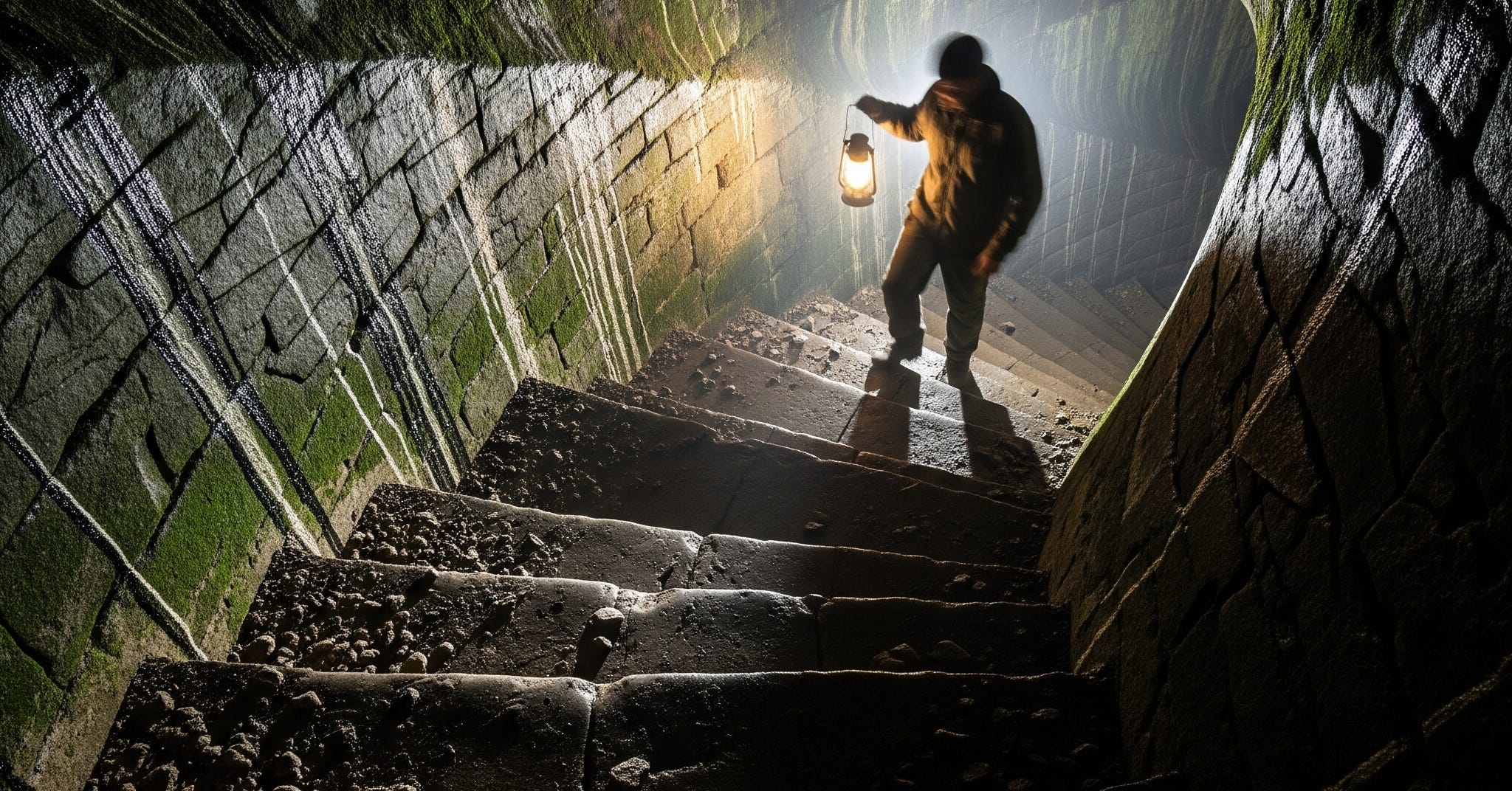
Pausing for a moment, you dab at the perspiration gathering about your forehead and upper lip, coaxed out by the stagnant, humid air that surrounds you. This should be it, the final doorway in your long search! After a steeling breath, you descend once more into the gloom.
Making the quarter turn, you can see from here that there's only a wall at the bottom of the staircase. No archway, no door, not even a knob! Roll WIL against… What was your score again? 12 was it? Roll WIL against your 12 to spot anything that might indicate a hidden passageway... And with a 12 that's just enough!
The stones that make up the walls are mottled with mildew and other growth—with the odd exception of a single stone brick on your right about halfway up the wall, three feet away from the dead end at the bottom of the stair... You touch it? All right… As you make contact with the clean stone brick, you feel it give way under the pressure of your weight with a soft, nearly imperceptible click.
Immediately, there's a whirring sound that seems to emanate from beneath where you stand, and the way before you that was only bricks slides to one side. Before you, in a chamber approximately 30ft x 15ft with a ceiling 20ft high, a slender, bald, bearded man sits in an impressive wingback chair at a trestle-style table. He appears to be writing by fire and candlelight with a massive wooden, barrel-topped chest sitting on a bias to his right, away from the papers he's scratching at. Across from him on the wide side of the trestle is an open wingback. He glances up from his endeavor, blue-green eyes flashing with mischief, and before you can do anything else intones, "Ah, welcome! You're just in time for—come, come sit! You've been seeking me for some time, I'm sure—welcome to my table!"
Intrepid adventurers, curious educators, fellow enthusiasts—this is "Behind the Screen", and I am Table Master. This blog is concerned with several things:
Tabletop Roleplaying Games! Which ones to try out, and why.
Practical tips and tricks for managing any table as a game-runner, no matter the system or your personal experience with it.
Ways to utilize TTRPGs to bolster the academic and social skills of young players.
My approach to game-running is informed by my background in education and youth development over the past twenty-odd years. I'm also a neurodivergent parent to neurodivergent kids, trying to help them be their most authentic selves in the least restrictive environments while navigating the treacherous and complex landscapes of school and social custom. So, whether you're a new player, a young player, a seasoned Dungeon Master, a curious parent, or just someone looking for new ways to engage young minds, pull up a chair—this is the table for you!

Why TTRPGs? The Power of Play
At its core, a TTRPG is a collaborative storytelling experience. Imagine a game where the rules are flexible, the possibilities are endless, and the only limit is your collective imagination. That's a TTRPG. Players create characters, often with unique abilities and backstories, and a "Game Master" (GM) or "Game-Runner" describes the world, presents challenges, and facilitates the narrative flow. Dice rolls often determine the success or failure of actions, but the story emerges from the choices made by the players and the GM's reactions.
My experience has shown that TTRPGs are far more than just a pastime; they are powerful tools for developing crucial life skills. These games naturally cultivate executive functioning skills (like planning and problem-solving), communication skills (articulating ideas and active listening), and emotional regulation (navigating success and failure). They also promote social-emotional learning (SEL), stretching participants’ empathy and conflict resolution. These games encourage creative problem-solving, and perhaps most importantly help build resilience to unexpected challenges.

Cultivating the Environment
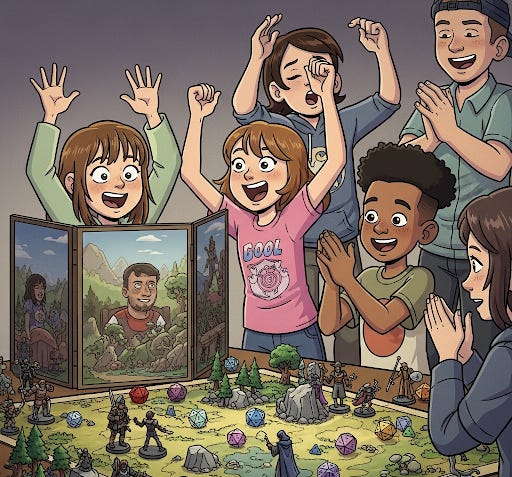
When game play is rooted in this philosophy I’ve outlined above -- in the perspective that the magic of TTRPGs isn't found in the rules, but rather the environment created around the table -- and when game sessions are presented mindfully, they become inclusive and safe spaces where players can explore, experiment, and grow. This helps build comfort and confidence, especially for neurodivergent learners who thrive on routine. It allows for scaffolded learning, introducing concepts and complexities gradually so players aren't overwhelmed and can build skills incrementally. Additionally, it promotes deeper immersion, fostering the shared experience in that supportive setting to naturally build community.
A Well Set Table
Irrespective of which system I introduce students to, there are four pillars that inform my success as a game-runner. I'll expound on these more as posts develop, but for now know that those pillars are:
Clear Standards of Engagement
Firm Ground Rules
Positive Pressure
Tangible Expectations
These pillars aren't just effective for younger players' satisfaction; I strive to bring these principles to every table I run, no matter who's playing at it that session.
Looking Ahead: What's Next for Behind the Screen
So, what's next for Behind the Screen? It's my intention to release new articles weekly on Thursdays, diving deeper into the nuances of TTRPGs and their broader impact. For the rest of August, I'll be sharing my observations from this past summer's seminars, highlighting the accessible and innovative game, Cairn Second Edition. I also intend to include at least one interview with someone from within the TTRPG industry every month, ideally someone connected in some way to whatever game system I'm detailing that month. Looking ahead to September, I'll be hosting my first meet-up for youth players (keep an eye out for more details if you're in the Twin Cities area!). What would you like to see me cover? Comment below to help shape this space with me!
Join the Table
If you made it this far, thank you for your attention! If anything I've said here resonates with your vibe, subscribe for more of this content. Or, share it with someone you think it might help. Either way, remember: If you want to build your abilities and confidence, no matter where you're sitting, this is the table for you!